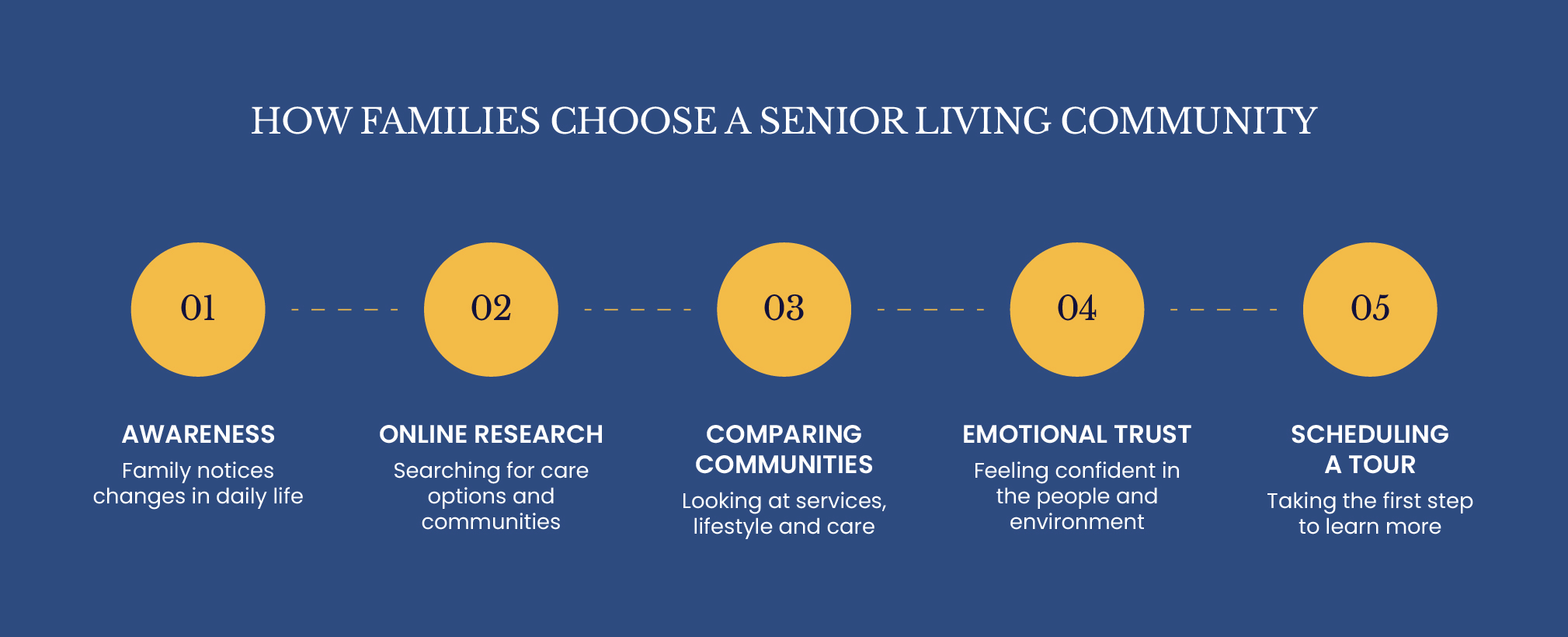
Senior living lead generation works best when communities combine search visibility, trustworthy content, paid advertising, conversion-focused websites, and consistent admissions follow-up.
A specialized senior living marketing agency can connect these channels and show which campaigns generate qualified inquiries, scheduled tours, and move-ins. Instead of measuring success through traffic or clicks alone, communities need a coordinated system that helps prospective residents and their families find information, build confidence, and take the next step.
Build Senior Living Lead Generation Around Family Decisions
Effective senior living lead generation begins with understanding what prospective residents and their families need before they will contact a community.
The National Institute on Aging’s guidance for choosing a long-term care facility recommends considering care needs, available services, location, costs, quality, and the facility environment.
A community’s website should make these details easy to find instead of requiring families to search through multiple pages or contact admissions for basic information.
Strong lead generation content should clearly communicate:
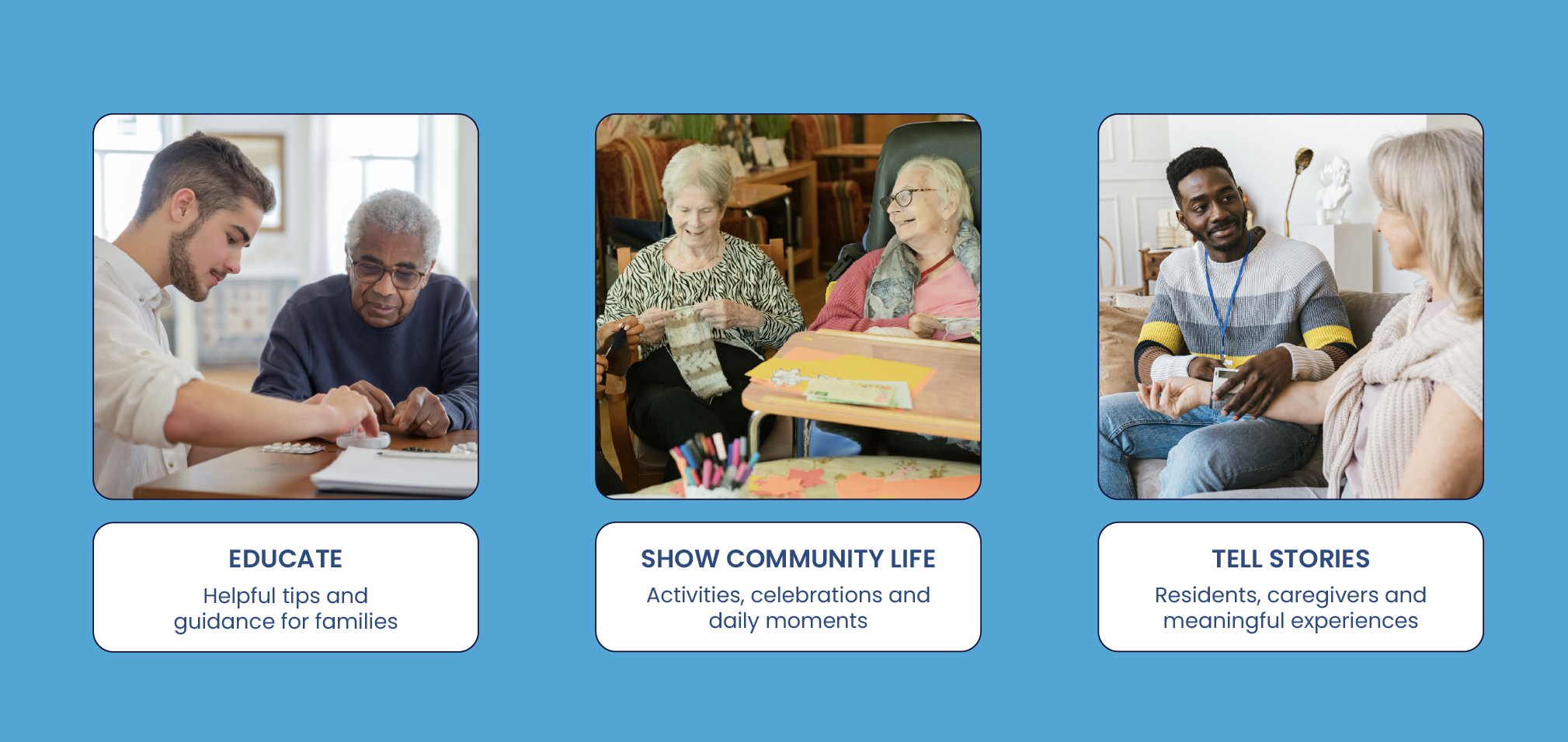
- Available care levels, services, amenities, and resident experiences
- Who the community is designed to support and what the admissions process involves
- Clear next steps, such as requesting information, discussing pricing, or scheduling a tour
Golden Chapter connects these touchpoints through integrated marketing senior living services that include SEO, PPC, branding, website design, email marketing, and social media.

Capture Existing Demand Through Search
Search marketing helps communities reach families who are already looking for care options.
Someone searching for assisted living, memory care, or senior living in a specific city is showing stronger intent than someone encountering a general awareness advertisement.
Improve Local Search Visibility
Local SEO helps search engines understand where a community is located, which services it offers, and which searches it may satisfy.
Google explains that local search results are primarily based on relevance, distance, and prominence in its official local ranking guidance. A community cannot change its physical distance from a searcher, but it can strengthen relevance and prominence through accurate business information.
A comprehensive SEO strategy for senior living should coordinate:
- Service and location pages
- Google Business Profile optimization
- Technical website improvements
- Educational content
- Local reputation signals
- Conversion and call tracking
The objective is not simply to increase rankings. SEO should attract people whose needs, preferred location, timeline, and care requirements align with the community.
Create Content for Search and AI Answers
Families may now encounter featured snippets, AI summaries, map results, and direct answers before visiting a website. Content must answer questions clearly enough to be understood by both readers and search systems.
Pages should answer one primary need instead of combining every subject into a single general page.
An integrated senior living digital marketing strategy can connect this content with local SEO, paid advertising, email follow-up, social media, and website conversion improvements.
Match Each Channel to Its Lead Generation Role
No single channel should carry the entire senior living lead generation strategy. Each channel reaches people at a different stage and should be measured according to its role.
| Channel | Primary Role | Best-Fit Audience | Useful Performance Measure |
| Local SEO | Capture sustained local demand | Families comparing nearby communities | Qualified calls, forms, directions, and tours |
| Paid search | Reach high-intent searches quickly | Prospects searching for specific care options | Cost per qualified inquiry and scheduled tour |
| Website content | Answer questions and establish trust | Residents and families researching communities | Conversion rate and inquiry quality |
| Email marketing | Nurture longer decisions | Families who requested information but are not ready | Replies, appointments, and reactivated leads |
| Social media | Demonstrate culture and credibility | Early-stage prospects and family members | Engaged visits and assisted conversions |
| Referral outreach | Build professional relationships | Care managers, healthcare providers, and local partners | Qualified referrals, tours, and move-ins |
A knowledgeable senior living marketing agency should explain how these channels support one another. Paid search can provide immediate visibility while SEO builds long-term discovery. Email can continue a conversation after an inquiry, while social media can show the people, experiences, and culture behind the community’s claims.
Improve the Website Before Increasing Traffic
Sending more visitors to an unclear or difficult website will not solve a lead generation problem. Before increasing an advertising budget, a community should evaluate whether its website gives families enough information and confidence to continue.
Every important service or location page should have a clear next step.
Forms should collect only the information the admissions team will use. A long form can discourage early-stage prospects, but a form that gathers too little information may create qualification problems. The right balance depends on the community’s services, sales process, and follow-up capacity.
The website should also work well for older adults and family members using different devices or navigating with visual, motor, or cognitive limitations:
- Clear typography
- Readable contrast
- Simple menus
- Descriptive buttons
- Mobile-friendly layouts
Golden Chapter combines accessible, user-centered website design with warm messaging and trackable marketing systems.

Coordinate Marketing With Admissions Follow-Up
Lead generation does not end when someone submits a form or calls the community. Even a strong campaign can underperform when inquiries are answered slowly, ownership is unclear, or follow-up messages do not address what the prospect requested.
Marketing and admissions teams should agree on:
- What qualifies as a new lead
- Who is responsible for the first response
- How quickly follow-up should begin
- Which CRM stages represent inquiries, tours, deposits, and move-ins
- How unsuccessful and unqualified leads will be categorized
Reporting should connect campaigns to qualified inquiries, scheduled tours, completed tours, deposits, and move-ins. Traffic, impressions, and clicks can help diagnose performance, but they should not be presented as final business outcomes.
Ready to Improve Your Community’s Lead Generation System?
Golden Chapter Marketing helps assisted living, senior care, and senior living providers create connected systems built around discovery, trust, qualified inquiries, tours, and move-ins.
See how a specialized senior living marketing agency can strengthen your search visibility, website experience, paid campaigns, and reporting.
Frequently Asked Questions About Senior Living Lead Generation
Senior living lead generation is the process of attracting prospective residents and family decision-makers and encouraging them to contact a community. Common methods include SEO, paid search, website content, email marketing, social media, professional referrals, phone calls, contact forms, pricing requests, and scheduled tours.
Communities can generate more leads by improving local search visibility, publishing useful service information, optimizing website conversion paths, running targeted paid search campaigns, building professional referral relationships, and following up consistently.
The best sources depend on the market, care level, location, and admissions capacity. Local SEO and paid search can reach families actively researching care, while professional referrals, email, events, and social media can support trust over longer decision periods. Each source should be evaluated by lead quality and move-in results.
Lead quality improves when campaigns target specific care needs and locations, explain who the community serves, and set clear expectations before someone contacts admissions. Service details, qualification questions, call tracking, CRM stages, and feedback from the admissions team can help identify which campaigns attract suitable prospects.
A community should respond as promptly as its staffing and admissions process allow, especially when the inquiry indicates an immediate care need.