
If you’re wondering whether investing in a social media strategy is worth it, you’re not alone. In a world where paid advertising dominates most marketing strategies, the power of organic content is often overlooked.
Social media creates something that advertising alone cannot: trust.
Families looking for senior living options are not just looking for facts, pricing or amenities. They are looking for reassurance that they are making the right decision for someone they love. A thoughtful social media strategy allows senior living centers to showcase their community, values, and quality of care in a way that builds that trust.

What a Social Media Strategy actually means
A social media strategy is an action oriented plan outlining how an organization or individual uses social media to achieve specific business goals.
It acts as a roadmap for:
- Content creation
- Platform selection
- Audience engagement
This ensures all efforts are consistent, measurable and aligned with overall business objectives.
Without a strategy, content often feels random. With a strategy, every post serves a purpose and moves families closer to choosing your community.
Why Social Media Matters in Senior Living Marketing
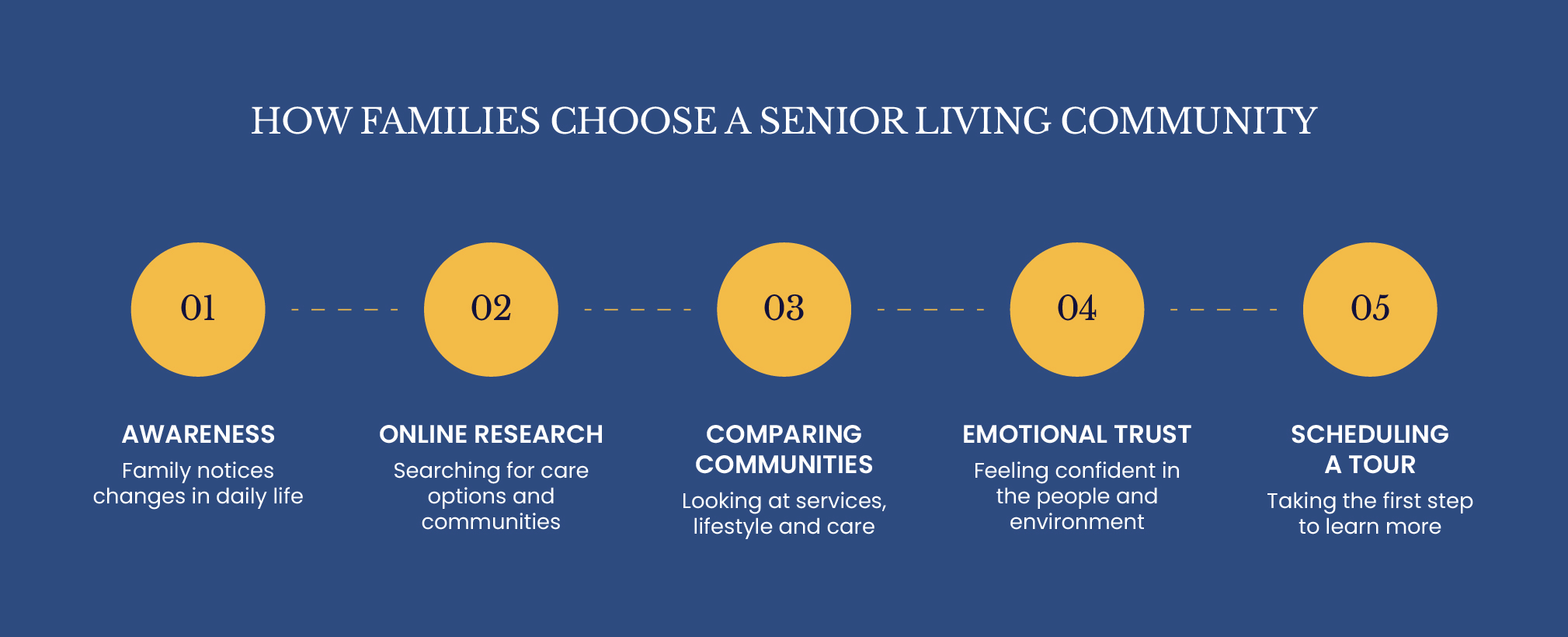
Choosing a senior living community is one of the most emotional decisions families make. They are looking for someone to trust their loved ones. That is why children often spend weeks or months researching options before contacting a facility.
During that process, they are looking for more than brochures or pricing sheets. They want to understand the environment their loved one might live in. And this is where social media can help.
According to Pew Research, over 70% of adults use social media, and many rely on it to research businesses and services before making decisions. For senior living centers, this means your social channels often become the first real look families get at your community.
Social media helps families answer questions like:
- What does daily life look like here
- Do residents seem happy and engaged
- What type of activities are offered
- How do staff members interact with residents
- What values guide the community
Seeing these things consistently builds familiarity and confidence before a family ever schedules a tour.
Types of Content That Build Trust
In senior living marketing, the goal is not only visibility but emotional reassurance.
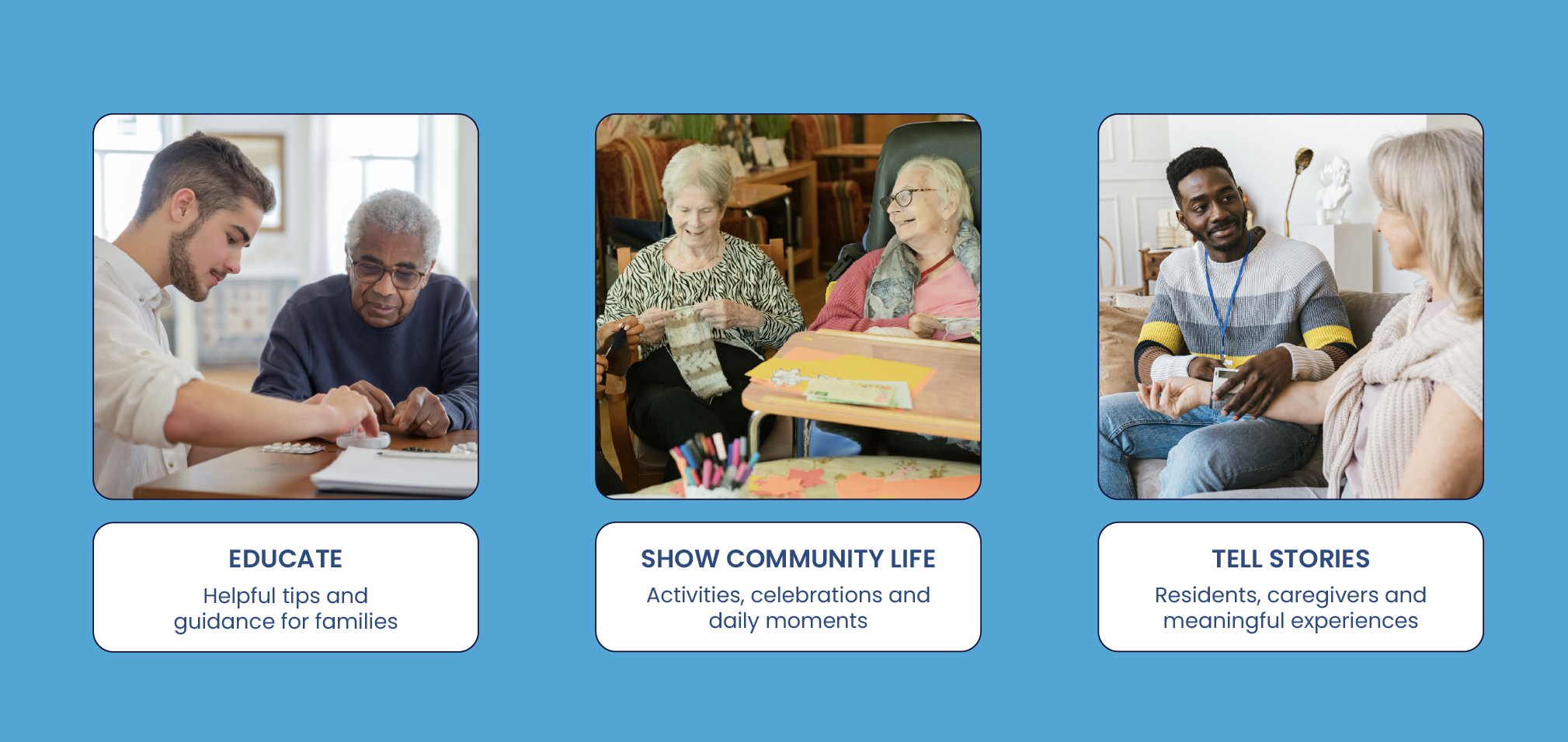
The most effective content typically falls into three categories:
1) Daily Live Content
This type of content helps families visualize what their loved one’s life might look like.
Examples include:
- Photos of residents participating in activities
- Short videos from events or celebrations
- Moments from group meals or social gatherings
- Seasonal decorations or community traditions
2) Educational Content
When communities provide helpful information, they become trusted resources rather than just service providers.
Examples include:
- Tips for recognizing when a loved one may need assisted living
- Guidance on talking with parents about senior care
- Information about memory care and cognitive health
- Advice for supporting aging parents
3) Human Story Content
Stories connect emotionally and remind families that behind every facility are real people providing compassionate care.
Examples include:
- Resident milestones and celebrations
- Staff spotlights and caregiver stories
- Family testimonials
- Community achievements
The Platforms That Matter Most
Senior living communities do not need to be active on every social platform. Instead, focus on the channels where families are already searching for information.
1) Facebook
Facebook remains one of the most important platforms for senior living marketing. Many adult children researching care options fall within the primary demographic of Facebook users.
It works well for sharing community updates, events, photos and educational posts.
2) Instagram
Instagram is ideal for visual storytelling. Short videos, photos and behind the scenes content help showcase the atmosphere of the community.
It also helps humanize the brand by showing staff personalities and everyday interactions.
3) Linkedin
LinkedIn is valuable for establishing professional credibility. Sharing industry insights, staff achievements and educational content helps position the senior living center as a trusted authority in care.
It also strengthens connections with healthcare professionals, referral partners and the broader senior care community.
Consistency Over Perfection
One of the most common challenges senior living communities face with social media is consistency.
Many teams feel pressure to create perfect posts, professional photography or elaborate video content. In reality, authenticity often performs better than overly polished material.
Families want to see real moments.
Posting consistently, even with simple content, creates a clearer picture of daily life in your community.
Consistency builds familiarity, and familiarity builds trust.
For senior living centers, social media should not feel like another marketing obligation. It is an opportunity to open a window into the community. Families want to see real moments, genuine care and the environment their loved ones could soon call home.
Common Social Media Questions from Families
Families researching senior living options often look for answers to similar questions online. A strong social media strategy can help address these concerns early.
- How can I know if a community is right for my parent
Seeing consistent content about activities, care philosophy and resident life helps families imagine their loved one in that environment.
- How involved and attentive is the staff
Staff highlights, caregiver interviews and behind the scenes content demonstrate the culture of care within the community.
- What does daily life actually look like
Daily life content provides transparency that brochures and advertisements cannot capture.
When social media answers these questions naturally through content, families feel more confident reaching out.

How a Social Media Strategy Supports Senior Living Growth
For senior living communities, social media is not just about visibility. It supports long term marketing goals.
A strong strategy can help:
- Increase brand awareness within the local community
- Build credibility with families researching care options
- Strengthen relationships with current residents and families
- Drive website visits and tour inquiries
Over time, consistent content creates a digital footprint that reflects the community’s culture, values and commitment to care.
At Golden Chapter Marketing, we help senior living communities create social media strategies that build trust with families and increase tour inquiries. Through thoughtful storytelling, strategic content planning and consistent posting, we help communities showcase the care, lifestyle and values that make them unique.