

Local SEO for Senior Living: Ranking Communities in Competitive Markets

When families begin looking for senior living, they rarely start with a phone call. They start with a search. They compare communities, read reviews, scan photos, visit websites, and try to figure out which option feels trustworthy enough to take the next step.

That is exactly why local SEO for senior living matters. It helps your community appear when people nearby are actively researching care, housing, support, and lifestyle options. For operators and marketing leaders, it is not just about traffic. It is about showing up at the right moment, building confidence fast, and turning visibility into inquiries, tours, and occupancy.

What Local SEO Means for Senior Living

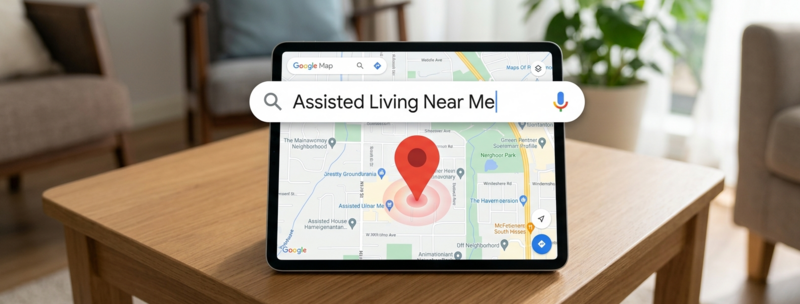
In plain language, local SEO helps your community appear in search results when someone looks for options in a specific area. That may include searches like “assisted living near me,” “memory care in Dallas,” or “independent living community in Scottsdale.”

For senior living, local SEO sits at the intersection of search visibility, trust, and user experience. It influences whether families can find you on Google, whether your Google Business Profile stands out, and whether your website answers the real questions people have before they ever speak with your team.

local-SEO-senior-living

Why It Matters More Than Ever

Families are doing deep research before they reach out. The National Institute on Aging notes that choosing a long-term care facility can be difficult and that families often need to compare options, services, and support carefully. At the same time, Pew Research Center reports that even among adults 65 and older, internet use remains widespread, which reinforces how digital research now shapes real-world decisions.

That shift changes the role of marketing for senior living communities.

Strong local SEO for senior living helps you:

  • Reach families earlier in their search
  • Show up in map results and localized searches
  • Build trust before the first conversation
  • Support tours, calls, and form submissions
  • Improve the quality of inquiries, not just the quantity

For communities in competitive markets, that difference matters.

How SEO Supports Inquiries, Tours, and Occupancy

SEO can sound abstract until you connect it to outcomes. In senior living, the path is usually straightforward.

A family member searches for care in your market. They see a few local options. They click the communities that look credible, close, and relevant. Then they decide which ones are worth contacting.

That means SEO supports occupancy in practical ways:

  1. It Helps You Get Found

If your community does not rank for the services and locations you actually offer, you miss high intent searchers. Google says local results are influenced by relevance, distance, and prominence. In other words, your community needs to match what people are searching for, clearly represent where you serve, and build enough trust signals to stand out.

  1. It Builds Confidence Quickly

Families are often evaluating multiple communities at once. A strong search presence tells them your brand is established, active, and credible. Clear titles, accurate listings, real reviews, and useful location pages all reduce friction.

  1. It Improves Conversion Quality

Good SEO is not about attracting everyone. It is about attracting the right people. When your pages align with services, care levels, amenities, and local intent, the inquiries that come in are more likely to be relevant to your admissions team.

That is why many of the best senior living marketing strategies begin with search intent.

What an Effective Senior Living SEO Strategy Includes

The good news is that SEO does not need to feel mysterious. A good strategy is structured, repeatable, and understandable.

Here are the building blocks.
local-SEO-for-senior-living

A Clear Local Keyword Strategy

Your community should have pages and content built around the real ways people search. That includes location-based phrases, service-specific terms, and intent-driven searches.

Examples might include:

  • Assisted living in your city
  • Memory care near a specific neighborhood
  • Senior living community in a metro area
  • Independent living with local modifiers
  • Questions families ask before scheduling a tour

This is one reason senior living marketing often falls flat when it stays too broad. General branding language may sound polished, but it will not rank well if it does not match how people actually search.

Optimized Google Business Profile

A verified and well maintained Google Business Profile is one of the most important local SEO assets you have. Google states that complete and accurate business information helps improve visibility in local search results, and verified profiles help businesses show up in Maps and Search.

For senior living communities, that means your profile should include:

  • Correct name, address, and phone number
  • Consistent service categories
  • Updated hours and contact information
  • Recent photos
  • Thoughtful review management
  • Clear service descriptions

This is often one of the fastest ways to strengthen local SEO for senior living without overcomplicating the process.

Service And Location Pages That Answer Real Questions

Your website needs more than a homepage. It should help families understand what you offer, who it is for, where you are, and what makes your community a fit.

That can include pages for:

  • Assisted living
  • Memory care
  • Independent living
  • Respite care
  • Specific cities, neighborhoods, or metro areas
  • Lifestyle, amenities, dining, or care philosophy

The best pages do not just chase keywords. They reduce uncertainty. They answer the questions your admissions team hears every day.

Reviews And Reputation Signals

In local search, reputation matters. Families read reviews because they want social proof from people who have already had an experience with your community.

That does not mean chasing a perfect score or flooding platforms with requests. It means building a consistent review process, responding thoughtfully, and making sure your reputation reflects the lived experience you want prospective residents and families to understand.

This is one of the clearest ways SEO and conversion work together. Reviews influence visibility, but they also influence whether someone feels safe taking the next step.

Technical Foundations That Support Visibility

You do not need to turn into a developer to understand the basics. Technical SEO simply means making your website easier for search engines and users to navigate.

That includes:

  • Fast page load times
  • Mobile-friendly layouts
  • Clear site structure
  • Proper title tags and headings
  • Indexable pages
  • Clean internal linking

If your site is hard to use, families notice. If Google has trouble understanding your content, rankings suffer. Technical work may happen behind the scenes, but its impact shows up in visibility and usability.

Content That Matches Family Search Intent

Educational content helps your community rank for earlier-stage searches and build trust before a prospect is ready to call.

That may include blog topics such as:

  • What is the difference between assisted living and memory care
  • How to compare senior living communities in your city
  • What families should ask on a tour
  • Signs it may be time to consider more support
  • Costs, lifestyle, and care planning questions

This is where senior living marketing agency support can make a big difference. The right team helps translate complex marketing work into content that is useful, empathetic, and aligned with revenue goals.

Why Local SEO Often Feels Frustrating

Many communities know they need SEO, but they still feel unsure what it is doing.

That usually happens for a few reasons:

  • Reporting focuses on vanity metrics instead of real leads
  • Agencies speak in jargon instead of plain language
  • Strategy gets disconnected from occupancy goals
  • Website updates, listings, content, and conversion paths are managed in silos

That disconnect is expensive. You may be investing in search visibility without understanding how it affects calls, form fills, tours, or move-ins.

A stronger approach is simpler. Focus on what can be tracked. Prioritize what families actually need. Make every digital touchpoint easier to understand.

That is how SEO helps improve senior living occupancy over time.

What Makes A Senior Living-Focused Approach Different

Senior living is not just another vertical. The audience is different. The decision cycle is different. The emotional context is different.

Families are often carrying urgency, stress, uncertainty, and guilt while trying to make a careful decision. Your digital presence should respect that.

That means effective local SEO for senior living should not feel robotic or overly technical. It should feel human.

A senior living-focused approach usually works best when it combines:

  • Search strategy tied to service and geographic intent
  • Content that answers real family concerns
  • Website UX that feels calm and easy to navigate
  • Local optimization that supports maps, listings, and reviews
  • Reporting that connects visibility to inquiries and tours

This is also why the best senior living marketing strategies balance empathy with performance. Families need clarity. Leadership teams need results. Good SEO should support both.

local-SEO-for-senior-livin

How Golden Chapter Makes SEO More Understandable

Golden Chapter Marketing positions itself around clarity, empathy, and trackable performance. Rather than turning SEO into a black box, the goal is to make it understandable, measurable, and connected to outcomes that matter for senior living communities. That includes visibility, qualified inquiries, and the digital experience families have before they ever speak with your team.

That matters because many operators are not looking for more noise. They are looking for a partner who can simplify what matters and help increase senior living occupancy with a repeatable process.

For communities that want a clearer path forward, Golden Chapter’s work starts with the fundamentals:

  • Understand how families search in your market
  • Improve the local signals that influence visibility
  • Build pages that answer real questions
  • Connect SEO efforts to trackable lead actions
  • Keep reporting focused on meaningful outcomes

Assisted Living PPC Management: A Practical Guide

If your community has ever tried Google Ads and thought, “we paid for clicks, but where are the admissions?”, you are not alone.

Pay-per-click advertising can absolutely support occupancy goals, but only when it is managed with the realities of senior care in mind. Families are making a high-trust, high-emotion decision. Your ads and landing pages have to meet them with clarity, warmth, and the right information at the right moment.

This guide breaks down assisted living PPC management in plain language so you can understand what is happening behind the scenes, what to watch for, and what typically separates wasted spend from qualified inquiries.

What Assisted Living PPC Management Actually Means

At its core, assisted living PPC management is the ongoing work of planning, launching, and improving paid search campaigns so your community shows up for high-intent searches, while filtering out low-intent traffic.

Think of it like this:

  • PPC is the vehicle (Google Ads, Microsoft Ads, paid maps placements, and similar).
  • Management is the navigation system, maintenance plan, and guardrails that keep you from driving in circles.

A well-managed program is not just “running ads.” It involves:

  • Choosing the right searches to show up for (and the wrong ones to avoid)
  • Writing ads that are compassionate and specific, not salesy
  • Sending clicks to landing pages that make it easy to take the next step
  • Measuring outcomes that matter, like qualified calls and tour requests, not vanity metrics

Golden Chapter Marketing is built around making digital marketing easier to understand and reporting on what matters, without fluff or confusing statistics.

Why PPC Gets Expensive Fast in Assisted Living

Assisted living is competitive, and click costs can be high. What makes it trickier is that you are advertising in a category where many different audiences search similar terms.

Here is what often goes wrong:

  • Job seekers click your ads because your keywords are too broad (for example, “assisted living near me” can still attract someone searching for “assisted living jobs near me”).
  • Students and researchers click when you appear for informational searches that are not connected to a move-in decision.
  • Families click but bounce because the landing page is confusing, slow, or does not answer the first questions they have.
  • Your campaign “looks busy” but leads are unqualified, unreachable, or not a fit for your care level.

This is exactly why assisted living PPC management needs structure, negative keywords, and landing pages built for real decision makers, not generic traffic.

DIY PPC vs Strategic Management by a Senior Living Focused Agency

Some communities can launch a basic campaign in-house. The problem is not effort. The problem is that PPC rewards specialization and consistency.

What DIY usually looks like

  • You target a handful of broad keywords
  • You run the same ad to the same page for every search
  • You check results occasionally, usually by looking at spend and clicks
  • You make changes only when something feels off

Sometimes that works for a short time. Often, it slowly turns into a budget leak.

What strategic assisted living PPC management looks like

A senior living-focused approach tends to include:

  • A clear plan for high-intent searches vs research mode searches
  • Location strategy that matches your real drive radius and competitive landscape
  • Always-on negative keyword lists to block jobs, training, free resources, and unrelated care types
  • Landing page testing and improvements to reduce wasted clicks
  • Reporting that connects ad spend to real inquiries, admits, and move-in pathways

Golden Chapter Marketing is a senior living marketing agency that simplifies complex marketing and focuses on measurable ROI, with integrity and transparency as core values.

PPC Strategies that Work for Assisted Living Communities

Below are practical, proven levers that typically improve quality and reduce waste.

1) Start with intent-based keyword planning

Not all searches are equal. You want to prioritize phrases that signal someone is actively evaluating options.

High intent examples:

  • “assisted living near me”
  • “assisted living [city] pricing”
  • “assisted living community with memory care [city]” (only if it matches your offering)
  • “tour assisted living [city]”

Lower intent examples (often still useful, but handled carefully):

  • “what is assisted living”
  • “difference between assisted living and nursing home”
  • “average cost of assisted living”

A strong assisted living PPC management plan usually builds separate campaigns or ad groups for different intent levels so budgets do not get blended together.

2) Use negative keywords like your budget depends on it (because it does)

Negative keywords are how you stop paying for the wrong clicks. They are one of the biggest differences between average and excellent performance in assisted living google ads.

Common negative keyword themes:

  • Employment: “jobs,” “hiring,” “career,” “salary”
  • Education: “classes,” “training,” “certificate,” “school”
  • Free resources: “free,” “PDF,” “template,” “powerpoint”
  • Unrelated care types: “pediatric,” “rehab,” “independent living” (only if not relevant)
  • Competitor brand names (sometimes, depending on strategy)

This is one of the most practical areas where an assisted living PPC agency earns its keep. It is not glamorous, but it protects your spending.

3) Location targeting that matches how families actually search

Families often start with “near me” and then widen their radius as they learn what is available. Your ads should reflect that reality while still protecting the budget.

Location tactics that tend to work:

  • Target by radius around the community, not just an entire metro area
  • Use location bid adjustments for the highest converting zip codes
  • Align targeting with referral patterns (hospital corridors, adult child neighborhoods, and affluent areas when relevant)
  • Exclude areas you cannot realistically serve

Golden Chapter Marketing emphasizes systems that fit the senior living audience and make performance easier to understand.

4) Ad copy that is ethical, specific, and calm

Assisted living ads should not feel like retail. Families are scanning for safety, clarity, and fit.

Messaging that tends to improve lead quality:

  • “Assisted living support with daily care and dignity”
  • “Schedule a tour” language can work, but avoid pressure
  • Highlight practical differentiators (dining, activities, care availability) without exaggeration
  • Use sitelinks and callouts to guide families to the right information

Ethical, compassionate messaging is part of building trust, which is central to Golden Chapter’s positioning as a caring, senior focused partner.

5) Landing pages that match the search and make the next step simple

PPC for assisted living facilities is only as strong as the page behind the click. Sending paid traffic to a generic homepage is one of the most common reasons campaigns underperform.

A strong landing page usually includes:

  • A headline that mirrors the search (“Assisted Living in [City]”)
  • A short, clear explanation of who you help and what daily life looks like
  • Trust signals (reviews, accreditations, years in community, transparent next steps)
  • Fast load time, mobile friendly design, accessible formatting
  • A clear path to call or request information without feeling trapped

Golden Chapter’s website design approach centers on intuitive, accessible, user centered experiences for seniors and families, which directly supports conversion from paid traffic.

The PPC Metrics that Matter for Occupancy

Clicks and impressions are not meaningless, but they are not the goal. Assisted living PPC management should prioritize metrics that tie to real outcomes.

Healthy KPIs to track:

  • Cost per qualified call (not just cost per click)
  • Cost per tour request
  • Conversion rate by keyword theme (high intent vs research)
  • Lead quality notes from your admissions team
  • Missed calls and after-hours coverage issues (often a hidden conversion killer)

Golden Chapter Marketing’s “no fluff” reporting philosophy is built around translating performance into meaningful outcomes and simple reporting.

How PPC Connects with SEO, Branding, and your Website

PPC is fastest when you need demand now. But it works best when it is not operating alone.

PPC + SEO for senior living

SEO supports long term visibility and often improves PPC performance too, because you learn which messages and topics families respond to. When PPC and SEO collaborate, you build a smarter keyword map and stronger content alignment. 

PPC + branding for senior living

Families do not separate ads from your reputation. If your ads sound calm and supportive, but your brand feels inconsistent when they land on the site, trust drops. Strong branding makes clicks more likely to turn into conversations.

PPC + website design for senior living

Paid traffic amplifies whatever experience your site delivers. If the website is clear, accessible, and easy to navigate, you waste fewer clicks and your cost per inquiry usually improves.

PPC + social media for senior living

Social content supports trust building. Even if a family finds you through senior living PPC, they may still look for photos, stories, and signals that your community feels human and safe.

What It Looks Like when Golden Chapter Manages PPC for Assisted Living

Golden Chapter Marketing is a senior living marketing agency created to bring senior living marketing into 2026, with compassionate, modern systems and simple reporting.

In practice, assisted living PPC management through Golden Chapter centers on:

  • Protecting spend with a tight intent strategy and negative keywords
  • Writing ethical ads that respect the emotional context of senior care decisions
  • Building campaigns around occupancy-focused KPIs, not platform vanity stats
  • Making results easy to understand so you can make confident decisions

A Simple Checklist you Can Use This Week

If you only have 20 minutes, this is a solid start:

  • Search your core keywords and see what your ads look like compared to competitors
  • Review your search terms report for job, training, and research clicks
  • Tighten match types on the most expensive keywords
  • Add negative keywords for the most common low-intent themes
  • Check that your landing page matches the promise of the ad, loads fast, and works well on mobile

That is the heart of assisted living PPC management: less waste, more fit, and clearer visibility into what is truly driving inquiries and admits.

Senior Living Occupancy: A Practical Digital Playbook to Fill Units With Confidence

If you lead a senior living community, you already know the pressure of empty rooms. It is not just a revenue problem. It is the feeling that your team is ready to care for more residents, and families who need support still have not found you.

The good news is that you do not need louder marketing. You need clearer marketing, built for how families actually choose care today. Golden Chapter Marketing focuses on senior living digital experiences that help people make confident decisions during life’s biggest transitions, with systems designed to be simple, trackable, and human.

In this guide, you will learn how modern digital marketing and better website experiences can improve senior living occupancy without making your team feel like they need a marketing degree.

Senior Living Occupancy

Why Senior Living Occupancy is Getting More Competitive

The decision journey has changed. Baby Boomers and Gen X are now the primary decision makers for many moves, and online research is often the first step. Your referral partners still matter, but they are no longer the only path.

When families search, they are trying to answer questions like:

  • “Is this community safe and caring?”
  • “Will my parents be treated with dignity?”
  • “Can we afford it, and what is included?”
  • “How soon can we tour or move?”

Golden Chapter’s positioning is built on a simple reality: senior living is entering a more competitive era, and communities that do not keep pace digitally will feel the gap in inquiries and tours.

The Hidden Cost of Inconsistent Marketing

Most communities do not have a “no marketing” problem. They have an “inconsistent marketing” problem.

Here is what that looks like in the real world:

  • Your website looks fine on your desktop, but on a phone it is hard to read, slow to load, or confusing to navigate.
  • Your reviews are strong, but they are not highlighted in the places families look first.
  • Your search visibility is spotty, so you show up sometimes, but not when it matters most.
  • Your paid ads run, but the reporting does not connect clearly to tours, inquiries, or admits.

This is where senior living occupancy quietly slips. Not because you are doing nothing, but because the experience feels uncertain to families who are already stressed.

Start with a Website that Reduces Stress Instead of Creating It

Your website is not a brochure. Your admissions partner works nights and weekends.

A strong senior living website experience should do three things fast:

  1. Confirm the visitor is in the right place
  2. Build trust in your care, your team, and your environment
  3. Make the next step feel simple

A few practical website improvements that often move the needle:

  • Make key pages easy to scan with short sections and clear headings
  • Use simple language that families can repeat to each other after they leave the site
  • Make photos feel real and warm, not overly staged
  • Ensure accessibility and readability for older adults and busy adult children
  • Reduce friction on mobile, because that is where many searches start

If your site is hard to use, you will see fewer calls, fewer form fills, and fewer tours. 

Increase Senior Living Occupancy

Use SEO to Show Up when Families Are Actively Looking

SEO is not a trick. It is simply helping your community appear when someone searches for care in your area.

To improve senior living occupancy, SEO should focus on two things:

1) Local intent

Families often search by city, neighborhood, or “near me.” If your visibility in search results is weak, your community becomes invisible at the exact moment someone is ready to talk.

2) Decision intent

Beyond location, families search for answers and reassurance:

  • Care types and who they are best for
  • What daily life looks like
  • How memory care works
  • Costs, amenities, and what is included
  • What happens after a tour

SEO works best when it matches real questions with clear pages that feel trustworthy.

Use PPC to Fill Short-Term Gaps and Protect Census

SEO builds momentum over time. PPC helps you stay visible right now, especially during seasonal dips or when you need to stabilize a community’s census.

The simplest way to think about PPC is this:

  • You choose which searches you want to show up for
  • You control budgets and targeting
  • You track what happens next, from click to inquiry

The key is avoiding “busy metrics” that look good but do not translate into admits. Golden Chapter’s positioning is clear: report on what matters, tie marketing to revenue, and keep results understandable for leaders.

Branding is not a Logo, It is How Safe you Feel in 10 Seconds

When families land on your website or see an ad, they make fast judgments. Not because they are shallow, but because they are tired, stressed, and trying to reduce risk.

Senior living branding should answer:

  • “Do they seem like people I can trust?”
  • “Do they feel warm, competent, and consistent?”
  • “Does this match what I would expect from a quality community?”

A few branding moves that support higher conversion rates:

  • Clear, consistent messaging that sounds like a caring human, not a brochure
  • A visual style that feels calm and supportive
  • Tone consistency across website, ads, social, and email
  • Simple explanations of care levels without clinical overload

Golden Chapter describes this as building brands that generate trust and humanizing identity with clear, warm messaging.

Social Proof and Social Media: Trust at Scale

Families want evidence that other people made this choice and felt good about it.

Social proof is not just testimonials on a page. It is the complete picture of what your community is like:

  • Reviews that feel current and visible
  • Stories that show staff stability and resident dignity
  • Content that helps adult children feel informed and less alone
  • Consistent presence that signals “this place is active, attentive, and real”

Social media is not about chasing trends. For senior living, it is often about steady reassurance. When done well, it supports senior living occupancy by shortening the trust timeline.

Email Marketing: The Follow-Up that Keeps Families Moving Forward

Many families are not ready after one visit to your site. They may need:

  • A conversation with siblings
  • A doctor’s opinion
  • A financial review
  • A second tour
  • Time to process guilt, fear, or uncertainty

Email marketing helps you stay present without being pushy. A simple, caring email sequence can:

  • Answer common questions you hear on tours
  • Share what daily life looks like
  • Explain care levels in plain language
  • Reinforce why families trust your team

It is also one of the easiest ways to support your admissions team, because it does not rely on someone remembering to follow up perfectly every time.

What “Trackable Marketing” Actually Means for Senior Living Leaders

If you are an executive director, administrator, marketing director, or part of an ownership group, you do not need more dashboards. You need clear answers.

A results-driven senior living marketing system should tell you:

  • Which channels are driving inquiries and tours
  • Which messages convert best
  • Where families drop off in the journey
  • What is improving month over month

Golden Chapter’s promise is straightforward: no fluff, simplified strategy, and reporting that connects to outcomes leadership cares about.

A simple process that keeps everyone aligned often looks like this:

  • Audit what families see today
  • Build a clear strategy tied to occupancy goals
  • Improve the website experience and conversion path
  • Launch SEO and PPC in a coordinated way
  • Optimize and report in plain language, then repeat
How To Improve Assisted Living Occupancy

A Full Census Starts with Fewer Question Marks

When families feel clarity, they take the next step. When they feel confusion, they keep searching.

If you want to improve senior living occupancy, focus on building a digital experience that feels:

  • Easy to navigate
  • Calm and trustworthy
  • Consistent across every touchpoint
  • Measurable, so leadership knows what is working

That is the lane Golden Chapter Marketing is built for: bringing senior living marketing into 2026 with systems that make digital marketing easier to understand and easier to trust. 

Request a Free Consult Icon Request a free consult